
Connecticut Freedom of Information Act
Connecticut's open-records law is the Freedom of Information Act, often called FOIA. It lives in Chapter 14 of the General Statutes, beginning at C.G.S. § 1-200. The core rule is simple. Records kept on file by a public agency are public unless a federal law or a state statute says otherwise. Any person can request them, and a requester does not have to explain why.
The statute defines the key terms. C.G.S. § 1-200 sets out what a public agency is and what counts as a public record. C.G.S. § 1-210 grants the right of access and lists the exemptions. You can read the full chapter on the General Assembly site through the Connecticut FOIA statutes page.
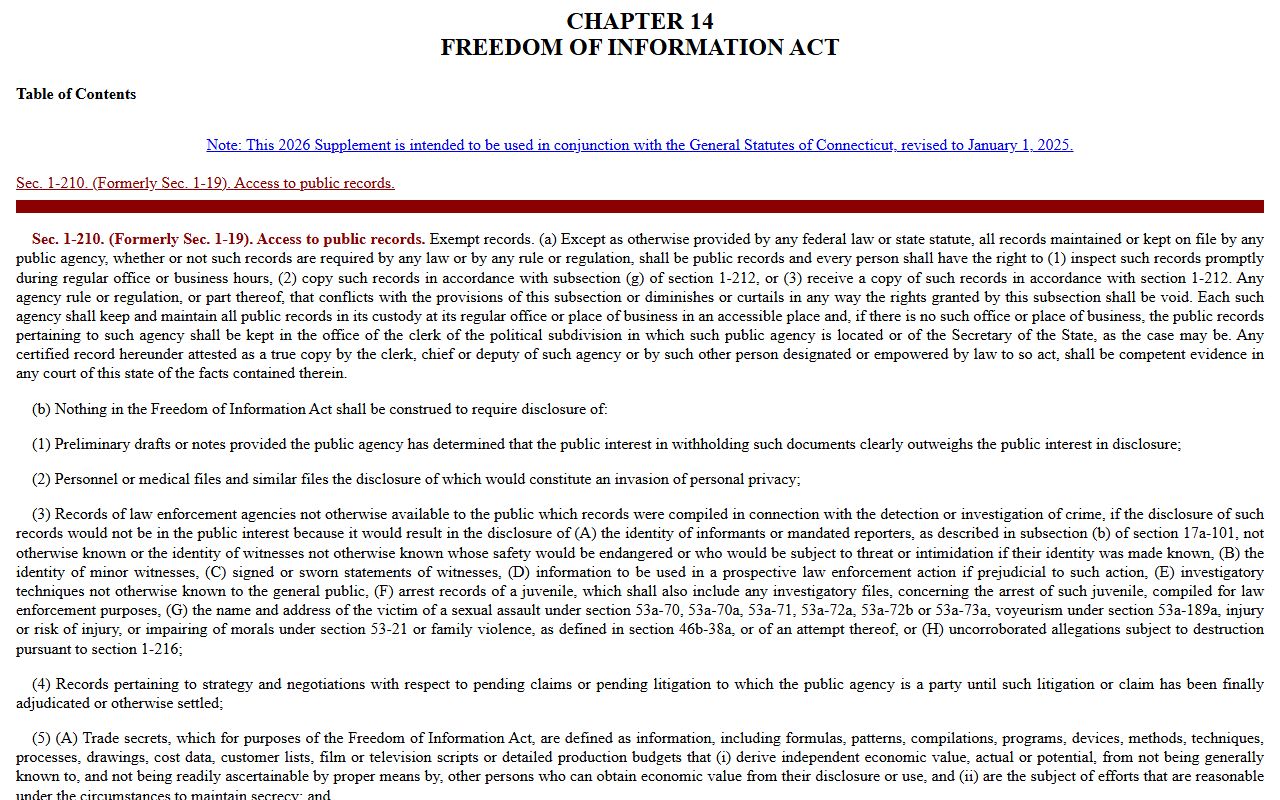
That chapter is the legal foundation for every New London County public records request sent to a town or state agency.
One point matters before you file. Court case records are not governed by FOIA. They follow the Judicial Branch Practice Book and related court rules. So a request for a town budget goes through FOIA, while a request for a Superior Court file goes through the court records process instead.
What Public Records Exist in New London County
Many of the records people want are not held by a court at all. Connecticut towns and state agencies hold a deep set of files. Town clerks keep land records and vital records. The Secretary of the State keeps business filings. State agencies keep their own program records. The categories below are common starting points for a New London County records search.
- Land records such as deeds and mortgages, kept by the town clerk where the property sits.
- Vital records, including birth, death, marriage, and civil union certificates, kept by town clerks and the State Vital Records Office.
- Business filings and entity records, kept by the Secretary of the State.
- Municipal records such as meeting minutes, budgets, contracts, and permits, kept by town offices.
- State agency records covering licensing, inspections, and program data.
The holder of a record decides how you reach it. Land and vital records are local, so the town clerk where the event happened or the property sits is the right office. Business records are statewide, so the Secretary of the State handles those. A request sent to the wrong office wastes time, so confirm the holder before you write.
For marriage and divorce specifics, see the marriage and divorce records page. For estates and trusts, see probate records.
How to File a FOIA Request in New London County
A FOIA request does not need a special form. Connecticut law lets you ask in plain language. Still, a clear written request to the right office gets the fastest result. Send it to the agency that actually holds the record, not a general county address, since Connecticut towns and state agencies each keep their own files.
- Identify the right office. Land and vital records sit with the town clerk; business filings sit with the Secretary of the State; agency records sit with that agency.
- Describe the records you want. Name the type, the dates, and any case or parcel detail that helps the office find them.
- Submit the request by mail, email, or an online portal if the office offers one. Keep a copy with the date.
- Wait for the response. The agency must act promptly under the FOI Act.
- Pay any allowed copy fee and receive the records, or get a written reason if any part is withheld.
Note: You do not have to state a reason for a FOIA request, and an agency generally cannot require one.
Public Records Request Fields
Whether you use an agency form or a plain letter, the same details belong in the request. They help the office route the request and find the records without a follow-up call. The table lists the common fields.
| Field | Required | Notes |
|---|---|---|
| Requester name | Yes | So the agency can respond; a reason for the request is not required. |
| Contact information | Yes | Mail or email address for the agency's reply. |
| Description of records | Yes | Be specific about record type and subject. |
| Date range | No | Narrows the search and lowers cost. |
| Format preference | No | Paper, electronic, or certified copy. |
Response Timelines
The FOI Act expects agencies to respond promptly. An agency should acknowledge a request within a short window and either provide the records, deny them with a reason, or explain when they will be ready. Complex requests that cover many files can take longer. If an agency stays silent or refuses without a valid basis, the law gives the requester a path to challenge that.
Keep your request and any reply in writing. A dated record of when you asked and what the agency said is useful if the matter ends up before the Freedom of Information Commission.
Some delays are normal. A request that asks for years of files, or files spread across several departments, takes longer to gather and review for exempt material. A narrow request is faster. Naming a date range and a record type, rather than asking for everything an office holds, helps the agency respond within the law's timeline.
Public Records Fees in New London County
The FOI Act controls copy fees for most agency records under C.G.S. § 1-212. Town clerk and vital record fees can differ because separate statutes set them. The table shows common charges, but each office can confirm its current rate.
| Item | Amount / Rule |
|---|---|
| Agency copy fees | Set under C.G.S. § 1-212 |
| Town-issued vital certificate | $20 per copy |
| State-issued marriage or death certificate | $20 per copy |
| State-issued birth certificate | $30 per copy |
Verify court record copy charges separately. The Superior Court clerk sets those, and they are not governed by the FOI Act fee rules.
Records That Are Exempt
Open by default does not mean open without limit. C.G.S. § 1-210 lists exemptions that let or require an agency to withhold certain records. These include some law enforcement and investigative material, privacy-protected personal data, and records another statute makes confidential. Arrest and investigative files can fall under these limits.
Some special registries operate under their own statutes. The Connecticut sex offender registry is one example, governed by the statutes in Chapter 969.
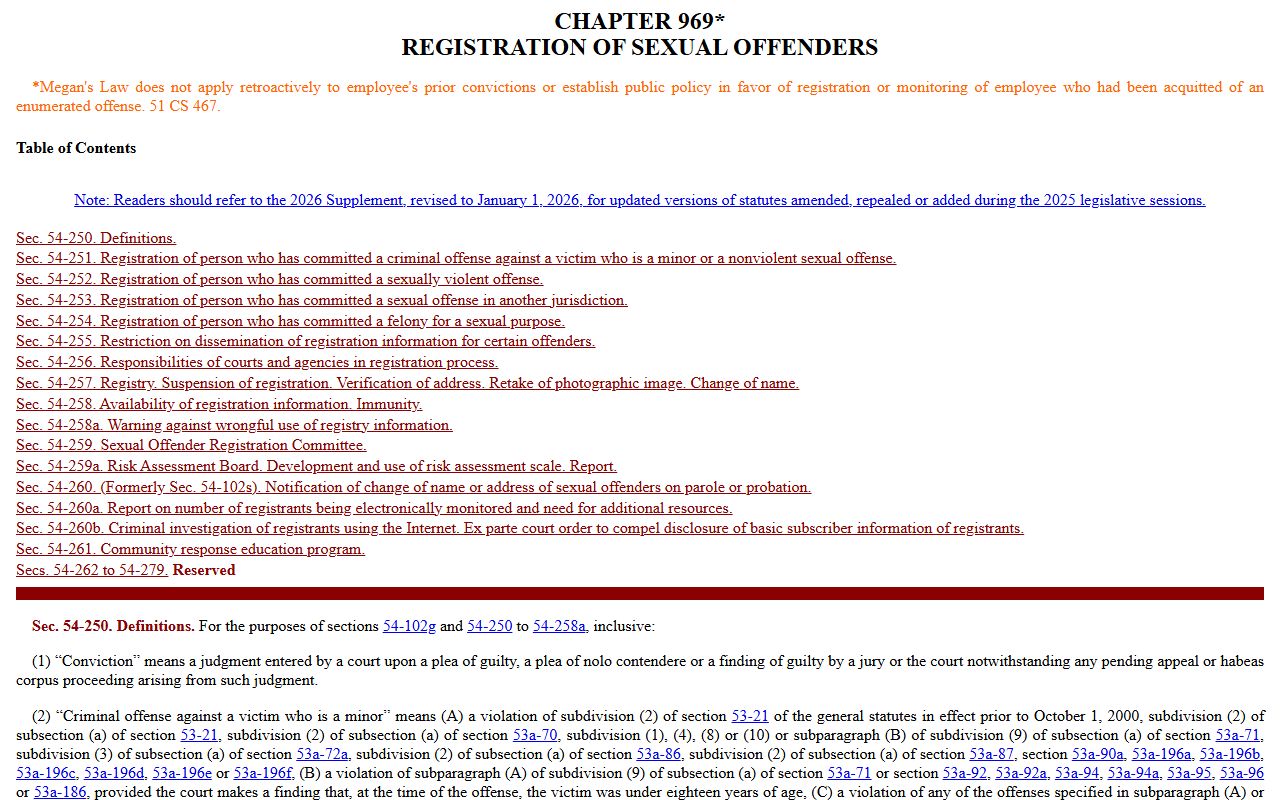
That chapter shows how a public registry can exist under its own rules, separate from the general FOIA framework that covers most New London County records.
Reading the Connecticut FOI Statute
The statute text rewards a close read. The definitions in C.G.S. § 1-200 control how every later section works. The access grant and exemptions in C.G.S. § 1-210 sit at the heart of most disputes. The copy and fee rules in C.G.S. § 1-212 decide what an agency can charge. The full text is on the General Assembly site as the Chapter 14 statute text.
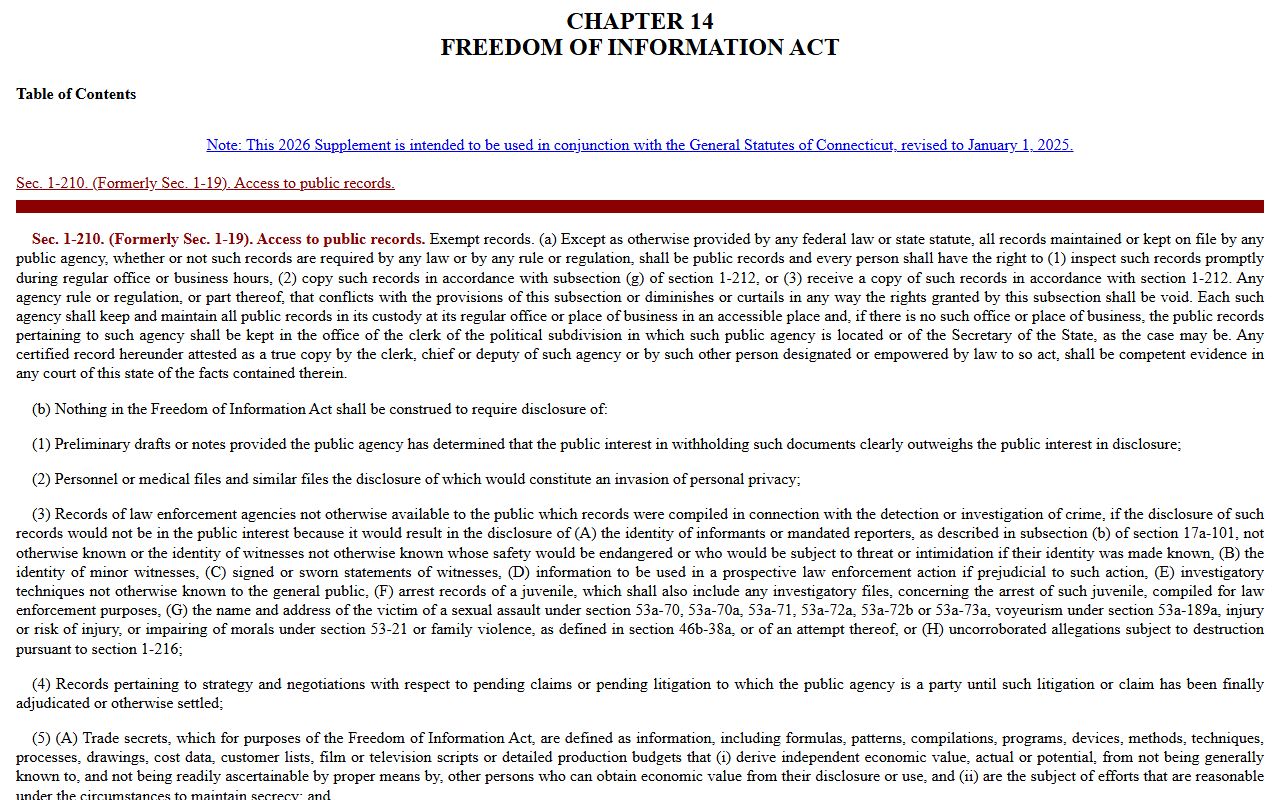
Reading the exact words helps a New London County requester frame a request and spot when an exemption is being claimed too broadly.
If Your Request Is Denied
The FOI Act enforcement route runs through the Freedom of Information Commission. Under C.G.S. § 1-206, a requester who is denied access to agency records can file a complaint with the commission, which holds hearings and issues decisions. This is the main appeal path for town and state agency denials.
The commission explains its role and the law on the FOI Act page.
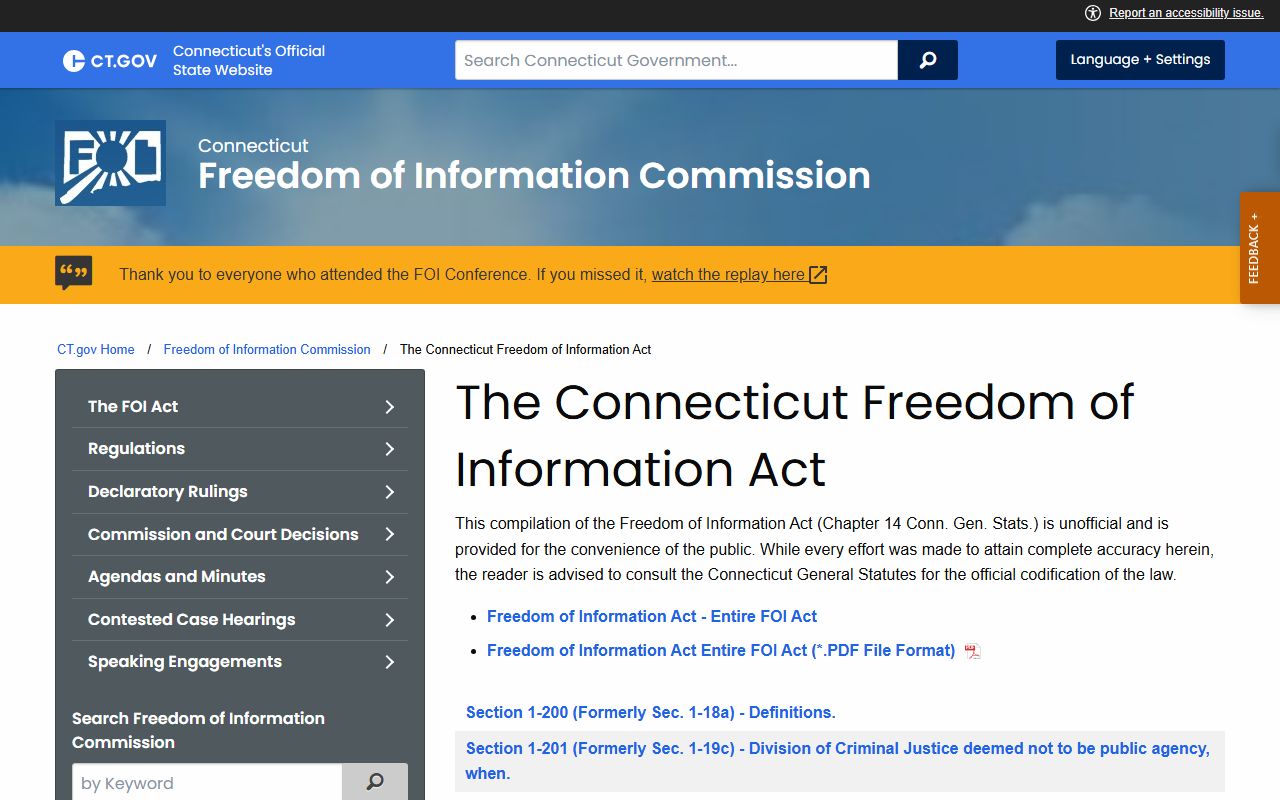
That resource is the starting point when a New London County agency denies a request and the requester wants the commission to review it.
The commission process is built to be usable without a lawyer. A requester files a complaint, the commission schedules a hearing, and it issues a decision that can order an agency to release records. That structure gives the public a real check when an agency withholds files it should not.
Court record denials are different. When a denial rests on a judicial rule or sealing order, the route runs through the court itself rather than the commission. Match the appeal path to the kind of record and the basis for the denial.